Sunday, 4 December 2011

A loucura contagiosa de Almodóvar

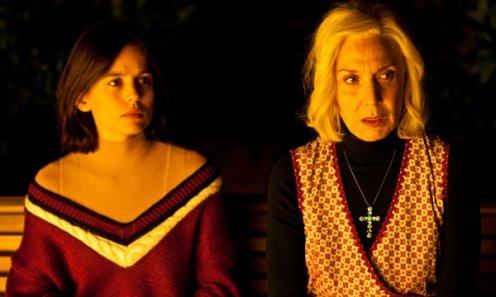
Se refizermos todos os momentos da história de La Piel que Habito, voltando atrás no tempo, tudo regressa a uma relação, a relação doentia entre dois irmãos, que herdaram a loucura da sua mãe. Apesar de passar um pouco despercebida, acho que a personagem de Marilia existe no filme de Almodóvar de uma forma muito discreta mas muito essencial. Nada foi deixado ao acaso neste filme, surgindo mesmo diversos pormenores que aos olhares mais atentos denunciam o desenrolar da trama como o facto de Vera querer ir para o jardim com Zeca ou o vestido que usa no fim do filme. A loucura parece como que quase um gene feminino nos filmes de Almodóvar e neste essa ideia é levada a um extremo, é uma loucura hereditária e contagiosa com consequências mórbidas.
Todas as personagens parecem cada vez mais embrenhadas na loucura desta mulher, que acaba por ser mais representada pelo seu filho, Robert, o cirurgião cujos "genes doentios" e as suas inevitáveis consequências o levam a criar uma personalidade quase como Dr. Jekyll (o célebre cirurgião) e Mr. Hyde (o homem que mantém refém uma mulher para a usar como cobaia das suas experiências retorcidas). Neste filme, Robert é a figura central, a sua vida passada é-nos contada e vemos todas as consequências trágicas desses acontecimentos na sua vida presente, mas, acredito que, apesar de muito discreta e subtilmente, Marilia é o cerne de tudo. Na verdade, a loucura quase genética das mulheres é o cerne de tudo, enquanto a história é o desenrolar sinistro e complexo dessa ideia.
O filme tem bastante mais a dizer do que isso mas esta foi a ideia que mais me chamou a atenção e acho que, de certa maneira, sintetiza o âmago do filme.

Marilia: Their fathers were very different but they were both born insane. It's my fault.
(não consegui encontrar esta frase no original, em espanhol)

Saturday, 3 December 2011

Thursday, 1 December 2011

It's my party and I'll cry if I want to

I don't want to achieve immortality through my work... I want to achieve it through not dying.
1 Dezembro 1935
Parabéns, cher Woody.

Tuesday, 29 November 2011

We are a mobile cinema. We take our shows to unusual places to create open cinema events, in which people are invited to reconsider film exhibition. We think carefully about the films we show and where we show them… thought provoking documentaries, show-cases for upcoming film makers or old classics, outdoors onto a wall, under a bridge, at a festival, or in a bookshop – why not?
Threading up some old 16mm reels on a borrowed projector for the first time we realised that the breath-held-in wonder of the dusty,noisy flicker of physical film had the potential to intrigue and delight.

Sunday, 27 November 2011

Habemus papam

Habemus Moretti

cinema doodles

L'amour en fuite

Antoine Doinel, Woody Allen e a casa do Monsieur Hulot.
Enfin, c'est ça Vincent Delerm.

C'est ma vraie vie
Mon histoire vraie
C'est mon job jusqu'à minuit
L'humour juif new yorkais

Saturday, 26 November 2011

After reaching an impasse with Universal regarding the length and cut of his latest film BRAZIL, Gilliam took out the following full page ad in Variety magazine…

Le top 5 de Tom Waits au cinéma

Awesome Gondry is awesome.

E sobre o futuro projecto de Michel Gondry, The We and I:
“I was kind of a loner when I was at school, I was hanging with the girls mostly, not the boys. I couldn’t understand why the boys were so stupid when they were in groups and why they would allow themselves to be so mean to each other. This movie is talking about that.”
(Hmm agora quero encontrar o programa do Jimmy Kimmel realizado pelo Tarantino.)

Sunday, 20 November 2011

Woody Allen: A Documentary

Allen’s persistence in using the one and only typewriter of his life, and in practicing cut-and-staple editing are certainly curious, quaint, idiosyncratic, even endearing; but they’re also proof on the wing of two of Allen’s lifelong qualities—untimeliness and hermeticism—as well as of the enduring struggle in his films between writing and experience.

(On Manhattan) Nothing new except the crabs, nothing young except Tracy (played by Mariel Hemingway), the seventeen-year-old high-school girl whom Isaac had been dating and had left. What looked like a celebration of the life of the city was, rather, an aestheticizing glorification of the life of the mind—of Allen’s mind.

His aura was his protective bubble, and it remained intact until 1992, when word broke regarding his romance with his longtime partner Mia Farrow’s adoptive daughter, Soon-Yi Previn (who is now his wife). The apocalyptically furious “Husbands and Wives” puts the turmoil of the time onscreen. When Allen lost his bubble, he lost his city, and, with it, he lost his artistic way—dramatizing it in a remarkable movie that Weide doesn’t mention, “Hollywood Ending,” in which Allen plays a director who, on the day he is slated to start shooting his big comeback picture, becomes suddenly blind and tries to get through the shoot nonetheless. (Along with all of “Zelig” and the opening two-train sequence of “Stardust Memories,” it’s one of Allen’s great metaphors.)

Weide’s film includes a clip of Allen, from 1967, discussing his occupational hazard: “I can’t not write jokes. I write jokes like normal conversation,” but his later films trade the scintillating verbal intelligence and philosophical humor of his classic films of the seventies and eighties—as well as his own dominating presence—for a quickly traced realization of the ideas that have been his lifelong obsession. There’s a remarkable pair of clips in which Allen’s mother explains that he was a cheerful boy until the age of five, when he seemed to become bitter—and Allen explains that, around the age of five, he discovered that he and everyone he loved were going to die. The jokes about mortality that run through his films become serious as he takes his aging seriously. An apparent lark such as “Scoop” is, among other things, a vision of his own death; and the confrontation with final things has deepened and darkened the best of his later films.

Meanwhile, the box-office success of “Midnight in Paris,” though incidental to its merit, reflects Allen’s belatedly acquired status as a survivor, as a prophet of a now-distant past. The onrush of days flattens the perspective of history (...) and the historical regression that the movie comically dramatizes fuses with the virtual offscreen image of Allen himself as a living herald of those days and of the moral authority that they convey.

Best Villains

mais aqui

this goddamn computer arrow!

Photobucket
música para um final de tarde de domingo.
A genialidade de Gene Kelly é definitivamente confirmada em It's Always A Fair Weather, e quem o negar não consegue compreender a beleza de uma dança em patins impossível de pôr em palavras ou mesmo das coreografias incrivelmente originais (com tampas de caixotes do lixo ou em split scren) apesar de este ser um dos últimos musicais de Old Hollywood.
Recorrendo a soluções criativas para contar a história, It's Always A Fair Weather é corajoso, engenhoso e muito súbtil na sua crítica social ao pós-guerra, à ilusão dos ex-soldados, à febre do consumismo e à publicidade e aos programas de televisão genéricos e fúteis que o público devora. Surge mesmo uma cena de luta entre os ex-soldados e uns mafiosos, onde mais parece tratar-se de um campo de batalha. Esteticamente apelativo, com as cores electrificantes de CinemaScope, este é um filme fora do comum quando visto nas entrelinhas.