Spike Jonze, uma livraria antiga parisiense, stop motion e arts & crafts e Terry Gilliam e uma inspiração Felliniesque.
Sunday, 16 October 2011

Fellini's fate
Filmmaker Chelsea McMullan’s emphatic new short documents the surreal myths surrounding Federico Fellini’s infamous unmade film Il Viaggio di G. Mastorna Detto Fernet (The Journey of G. Mastorna called Fernet), the story of a man living unknowingly in the afterlife. The avant-garde director described the project as his life’s curse, and legend has it that a magician once told Fellini that if he made the picture, it would be the last thing he ever did. Premiering at September’s Toronto Film Festival, Deragliamenti (Derailments)––an exclusive edit of which we present above––explores the tribulations surrounding the prospective movie and the La Dolce Vita director’s decision to produce the metaphysical tale as a comic strip with artist Milo Manara instead. “Manara saw himself as a vehicle through which Fellini could rid himself of the negativity,” explains McMullan. “The comic is less a visual adaptation of the film and more Fellini coming to terms with the approach of death.” In an eerie fulfillment of the magician’s prophecy, Il Maestro passed away six months after the publication of its first installment, making the comic strip the final project he ever worked on. We talked to McMullen about the enduring influence of the legendary Italian.
What did you find intriguing about the story of the curse surrounding Il Viaggio?
As filmmakers we use narrative to structure our thoughts and feelings, it gives us control over things we can’t explain. That’s why the curse is so fascinating. It had the ability to stifle Fellini from making the film.
Did you worry about the curse affecting you while making the documentary?
I had a bad accident riding my bike home one night and I remember lying on the pavement thinking that this was an extension of the curse. After that I started to be really paranoid. I think I was just living the story, which in way is a good thing, but it didn’t do much for my mental health.
You interview Manara in the documentary. Did he have any interesting insights into working with Fellini?
We conducted the interview in his studio in Verona. Manara explained he and Fellini would often go for dinner to discuss the project, and inevitably Fellini would start sketching his ideas on a napkin. Eventually Manara pulled out a drawer full of a thick pile of them, soiled with Bolognese, wine and olive oil. On each one was a faded sketch, some quite elaborate, others just faded lines, all hand drawn by Fellini.
Did Fellini see comics as being as important a medium as film?
Fellini considered and approached comics exactly as he did films. Visually, by using stills instead of moving images, Manara’s collaboration with Fellini acts as a bridge between comics and cinema.
What is it that still makes Fellini relevant today?
His films deconstruct every facet of popular culture in a single film: religion, paparazzi and celebrity. Fellini had the unique ability to be incredibly playful and dark at the same time. He placed the audience in a room full of funhouse mirrors and told them to look at themselves.
Saturday, 15 October 2011

Love & Death


Baisers Volés (1968), Truffaut
All men fear death. It's a natural fear that consumes us all. We fear death because we feel that we haven't loved well enough or loved at all, which ultimately are one and the same. However, when you make love with a truly great woman, one that deserves the utmost respect in this world and one that makes you feel truly powerful, that fear of death completely disappears. Because when you are sharing your body and heart with a great woman the world fades away. You two are the only ones in the entire universe. You conquer what most lesser men have never conquered before, you have conquered a great woman's heart, the most vulnerable thing she can offer to another. Death no longer lingers in the mind. Fear no longer clouds your heart. Only passion for living, and for loving, become your sole reality. This is no easy task for it takes insurmountable courage. But remember this, for that moment when you are making love with a woman of true greatness you will feel immortal.
Midnight in Paris (2011), Woody Allen


Tuesday, 11 October 2011
Les Femmes du 6éme Étage, Philippe Le Guay


A estética deliciosa, o multiculturalismo na Paris dos anos 60 e a comédia das espanholas "orgulhosas e corajosas"
ou Este filme dá-me vontade de redecorar o quarto e comer paella.
Modi


Só depois daquela cena em que Modigliani, completamente desesperado e suado, doente, arrasta-se por um café a tentar vender os seus rascunhos por 5 francos é que percebi a beleza de Montparnasse 19.
Aí comecei a ver os lindos close-ups, as sombras, a doçura de Anouk Aimée e a fragilidade de Gérard Philipe como Modigliani. Só no fim do filme, naquela cena tocante que mais lembra um pesadelo, quando, no meio do nevoeiro, o comprador de arte anda atrás de Modigliani que nem o espectro da morte. Só no fim, quando vejo toda uma vida de procura de reconhecimento e não de riqueza a ser colhida pela ganância e por um amontoado de quadros é que toda a beleza do filme me assola. Mais vale tarde do que nunca. Mas vale mesmo.
Enfin, a vida de artista é difícil.
Saturday, 8 October 2011
I'm a stranger here myself
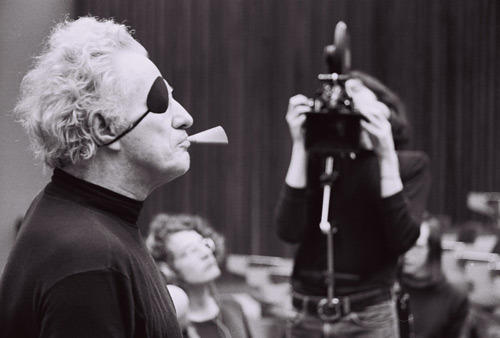 Interviewer: Your heros are pretty neurotic.
NICHOLAS RAY: My heros are no more neurotic than the audience.

Tenho uma teoria. O La Dolce Vita é um filme amaldiçoado, mas só para as actrizes principais que nelem participaram.
Há umas semanas atrás li esta notícia onde Anita Ekberg, aquela musa que quase que paira sobre a Fontana di Trevi, diz "You want to know if I feel lonely? Yes, a bit." e que o La Dolce Vita "was not a great film". Depois, esta semana surge esta notícia, segundo a qual a Anouk Aimée já não vem à cidade alfacinha por "motivos de força maior" (haverá pior expressão e menos esclarecedora do que "motivos de força maior"?!).
Bem, amaldiçoadas ou não, a verdade é que eu me sinto abençoada por ter visto este filme e agradeço muito ao senhor Fellini por ele. E é por isso mesmo que vou ter que discordar eternamente com o que Anita Ekberg disse.
Ver a versão restaurada de Le Voyage dans la Lune do Méliès e, ainda por cima, num grande ecrã, é outra coisa. Mas é mesmo. A couleur retrouvée desta curta histórica, traz uma nova perspectiva quando nunca pensei que sequer houvesse outra. A meticulosidade deste trabalho que consistia em pintar à mão, com um pincel, cada fotograma, dá um resultado de uma magia arcaica fantástica e inimaginável.
"Les films de Georges Méliès devaient, dans son esprit, être projetés en couleurs."
Bravo!


Quando o filme começa, e o filme dentro do filme é logo assim tão cativante é bom sinal. No início de The Artist, vemos uma sala de cinema dos anos 20, o público perfeitamente alinhado que, enquanto fala e ri, vê um filme, de uma história típica de aventuras e desventuras mas onde os jogos de sombra e o escuro do preto e branco, que lembram os film noir, falam por si só.
Começamos bem.
Começamos bem.
Sei que sou parcial mas simplesmente por trazer aquela época de ouro de volta, The Artist tem já um lugar especial no meu coração. É bom ver um filme tão audaz (a preto e branco e mudo em pleno século XXI) onde se oscila entre influências como Singin' in the Rain ou Sunset Boulevard. É uma história simples, mas a forma tão nobre e especial como Michel Hazanavicius faz esta homenagem a tempos idos é o que dá todo ao charme ao filme. Não é um simples filme com referências cinematográficas ou uma simples homenagem, é um filme único pois ao honrar um período do cinema, pega nele e cria algo novo.
Àquele preto e branco lindo com os respectivos jogos de iluminação juntam-se os close- ups, umas vezes da cara desesperada de George Valentin, outras vezes da cara apaixonada de Peppy Miller. A banda sonora de Ludovic Bource é fantástica ao acompanhar os altos e baixos da história, mas melhor ainda é quando pára, e surgem momentos de silêncio por 2 minutos, onde temos uma pequena janela de oportunidade para perceber a complexidade da personagem de George Valentin, naquele seu grito de desespero.
Neste jogo entre o cómico típico de Chaplin (existem momentos verdadeiramente cómicos) e o drama que talvez, por momentos, lembra Buster Keaton, o homem que não ri mas faz rir, surgem as personagens. As personagens com as quais estabelecemos uma incrível empatia. Damos por nós a dizer interiormente "não, não faças isso". Até isto relembra a época que Hazanavicius quer homenagear. Era o tempo em que à medida que o filme avançava também nós nos tornava-mos mais próximos das personagens. Não eram ídolos inantigiveís, mas sim amigos pelos quais torcíamos para que tudo corresse bem. Também isto não seria possível sem os actores, está claro. Não só Jean Dujardin, mas também John Goodman, James Cromwell e até o minúsculo papel de Malcolm McDowell ("olha o Alex!" disse eu na minha cabeça). E o cão, evidentemente.
Quando o filme acaba surge uma dança, passamos de Chaplin para Gene Kelly. Uma dança de pôr o pé a bater no chão e depois, finalmente, aparecem sons, palavras, pessoas a falarem. Parece que durante o filme todo estivemos surdos, estavamos a cantarolar a banda sonora na nossa cabeça, e o que importava eram só as imagens. Achamos piada às poucas palavras que surgem no fim e é a maneira perfeita para acabar o filme, com um "role action!" ou uma coisa do género, mas é aí que percebemos que podíamos ouvir mais umas horas daquela música e continuar a ser hipnotizados pelas imagens, somente por aquelas imagens em movimento.
Subscribe to:
Posts
(
Atom
)